
When Legal’s Not in the Room
Deals get messy when legal shows up to clean instead of shape.
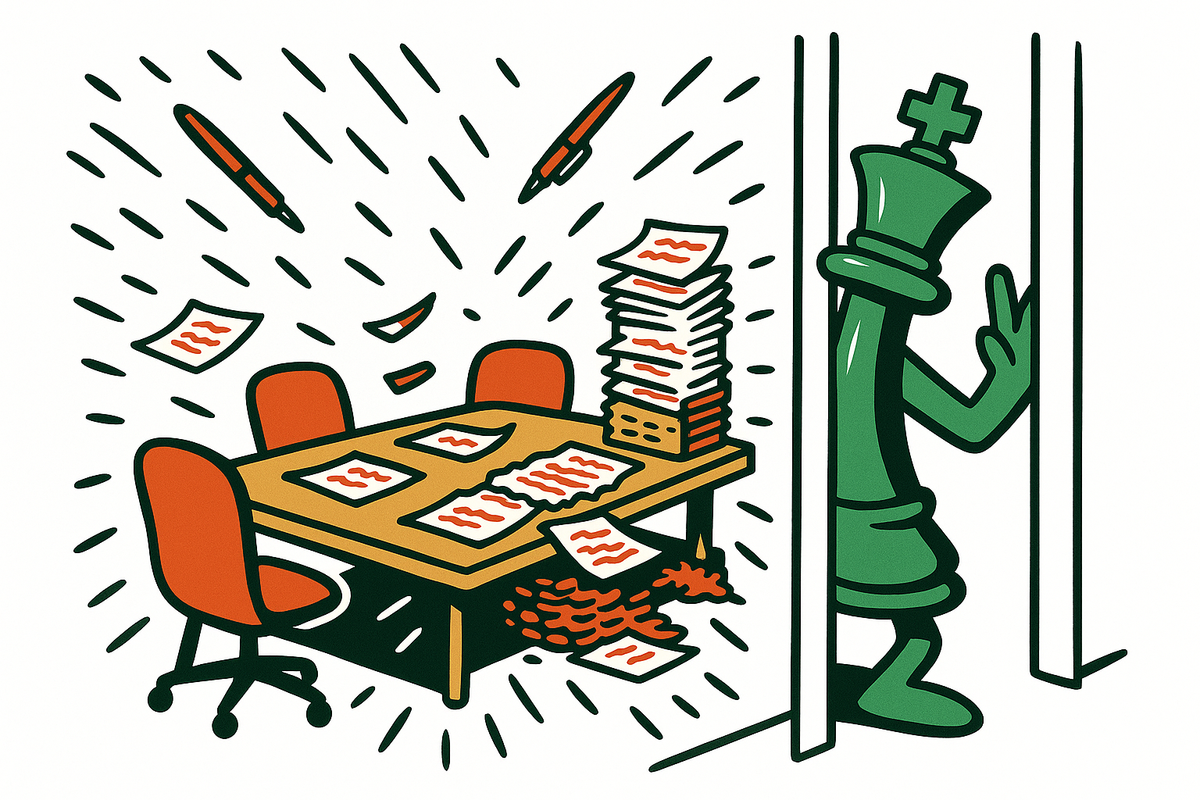
Redliner’s Log – Entry 2.1
Stardate: December 2, 2025
Location: Outer Rim. Legal out of comms range. Business decisions being made without cover fire.
Let’s talk about what happens when legal isn’t there.
Sometimes it’s because the team’s stretched too thin. Sometimes it’s because leadership thinks the lawyers will just slow things down. Sometimes it’s because there isn’t a lawyer at all—just a business owner with a red pen and a prayer.
No matter the reason, the result is almost always the same:
- Contracts get signed without a clear understanding of the risks.
- Issues that could’ve been resolved in minutes metastasize into weeks of back-and-forth.
- And the deal gets way dumber, slower, and riskier than it needed to.
And here’s the kicker: most people think they’re being efficient by leaving legal out.
The In-House Solo: Drowning in Redlines, Missing the Meeting
If you’re the lone in-house counsel, you already know the feeling.
You want to be strategic. You want to be proactive. But instead, you’re buried in inbound:
- Another one-off vendor NDA.
- Another 20-page redline from a partner’s “legal guy.”
- Another request to review a contract that starts with, “I know we need this signed today, but can you take a quick look?”
You miss the kickoff meeting. You miss the pricing call. You miss the moment where business terms shift—and suddenly the risk profile of the whole deal changes.
So when the contract finally hits your desk, it’s full of landmines you didn’t plant and can’t easily defuse. And guess who gets blamed for the delay?
The SMB Owner: Avoiding Legal (and Paying for It Anyway)
Now flip it. You’re a founder or small business owner.
Legal is expensive. You don’t have in-house counsel. You’ve got a law firm on speed dial, but every six-minute increment costs you dinner.
So you try to go it alone.
- You borrow a template from a friend.
- You copy terms from a past deal.
- You cross your fingers that indemnification means what you think it means.
And sometimes, it works.
But when it doesn’t? You don’t find out until it’s too late:
- That exclusivity clause you skimmed? Now you’re locked out of a new opportunity.
- That “termination for convenience” right you didn’t notice? They just used it—3 months into a 36-month deal.
- That unlimited liability you didn’t cap? It’s now a line item on your P&L.
And what’s wild is this: you’re not reckless. You’re just trying to get shit done without burning $750/hour every time someone sneezes on a contract.
The Common Thread: Legal Becomes a Reaction, Not a Strategy
Whether you’re solo in-house or flying without a net, the root problem is the same: Legal is being looped in reactively, not strategically.
And that delay? It causes friction.
- Because risks aren’t flagged early.
- Because terms don’t align with internal policies.
- Because the business makes commitments legal wouldn’t have signed off on and now it’s a mess to unwind.
This isn’t about ego. It’s about order of operations.
When legal starts on the back foot, the whole team ends up tripping over itself.
The Myth of “We’ll Just Clean It Up Later”
This one’s especially common in founder-led deals: “Let’s just get the deal done. Legal can true it up after.”
No. No, it can’t.
Because by the time the deal’s done:
- The leverage is gone.
- The urgency is gone.
- The willingness to renegotiate is very gone.
And if you think fixing bad terms later is cheaper than preventing them now? I’ve got a bridge, an arbitration clause, and a six-figure dispute resolution budget to sell you.
What We’re Really Talking About Is Systemic Support
Here’s the truth: legal doesn’t need to be in every meeting. But its perspective does need to be baked in from the start.
That means:
- Shared playbooks that reflect known risk tolerances.
- Tools that surface the common “flex zones” before anyone starts editing.
- A structured way for business users to flag, escalate, and understand legal redlines... without always needing to escalate to legal.
Because when you can see the issues early, you can solve them early. And early fixes are fast fixes.
No One Wants to Be the Bottleneck
Let’s be real: that “single-person legal department” doesn’t want to hold things up.
And business owners don’t want to take on unneeded risk.
They’re both doing what they think is best, but with limited resources and limited visibility.
The fix isn’t to push legal out. It’s to bring legal in earlier—through smarter tools, shared frameworks, and better defaults.
That’s not just more efficient. It’s more human.
Because nothing builds trust like clarity. And nothing kills trust like last-minute surprises.
Weigh in
What's your take on this? I'd love to hear your thoughts.
Join the discussion on LinkedIn