
The Shared Playbook (Or: How We Stop Pretending Every Deal Is Brand New)
We’re not negotiating new legal principles. We’re negotiating preference and leverage... and we already know how most of these debates end.
Redliner’s Log – Entry 3.1
Stardate: January 20, 2026
Location: Above the Fog. Visibility Improving.
I've spent the past few entries naming the chaos.
I've talked about the markup theater, the flex zones, the lack of alignment, the emotional toll of legal ambiguity, and the illusion of “winning” the redline.
Now it’s time to talk about the cure.
The Dirty Little Secret: We All Know the Playbook
Let’s start with some brutal honesty:
Most of us who’ve been doing this for a while? We know the playbook. Hell, we’ve written it.
We’ve sat on both sides of the deal table. We’ve represented vendors, buyers, founders, investors, employees, employers. We’ve argued every clause from every angle. We know where the real tension lives... and how it usually gets resolved.
Let’s not kid ourselves: there’s no grand mystery here.
There are only so many ways to handle a limitation of liability clause. Only so many indemnity configurations that actually make sense. Only so many paths through an IP ownership debate, or a termination provision, or a payment term dispute.
The reality is this:
We’re not negotiating new legal principles. We’re negotiating preference. And leverage.
So why are we still pretending each contract is a snowflake?
Why are we still dragging each other through the same performative markup dance… every… single… time?
What If We Didn’t?
What if we admitted what we all know?
That the majority of each contract is typically the same from deal to deal... and that it’s the minority that’s negotiable? It’s not chaos. It’s a pattern. A set of recurring decision points. A choose-your-own-adventure of dealmaking.
What if we stopped acting like every markup is a masterclass in bespoke risk negotiation…
…and just showed our cards up front?
Introducing: The Shared Playbook
Transactency isn’t a template. It isn’t a form. And it damn sure isn’t a “market standard” contract designed to lock you into someone else’s definition of fair.
We didn’t build a form. We built a framework.
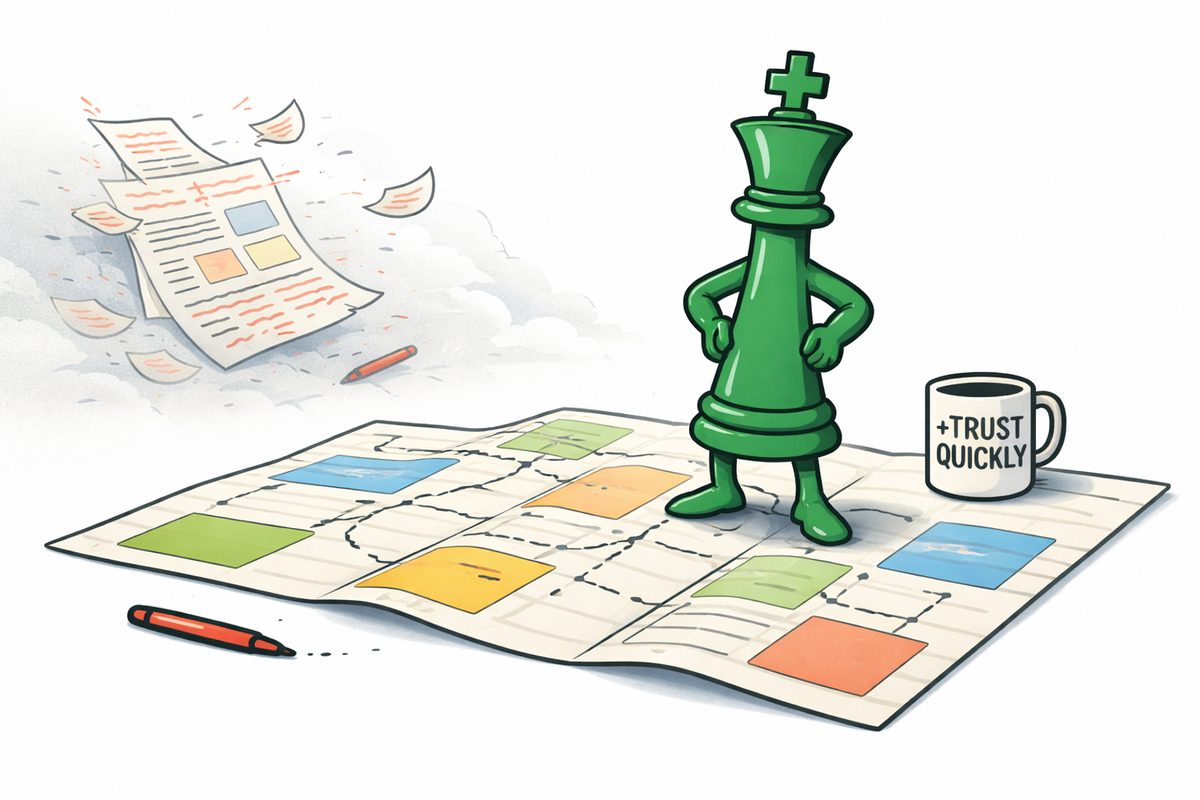
The Shared Playbook is a transparent system for showing both sides the same map, up front.
It lays out:
- What kind of contract this is
- What the standard building blocks are
- Where the flex zones live
- What the common positions are within each flex zone
- Which positions tend to align with which business needs or leverage dynamics
Think of it like this:
A traditional form is a prescription. The Shared Playbook is a menu.
You don’t have to take the most neutral option. You can pick something stronger if you’ve got the leverage. You can accept something softer if you’re in sales mode. You’re not limited... you’re empowered.
The difference is that everyone sees the same choices.
No traps. No gotchas. No backloaded tricks hidden in clause 13.7(b)(ii).
Just structured visibility, and clarity about what’s really being agreed to... and why.
Optionality ≠ Weakness
Let’s pause on this, because it’s vitally important.
Some folks hear “multiple options” and get nervous. They think it means giving up control. Or inviting chaos.
Nope.
Offering choices isn’t weak. It’s stronger alignment because it invites real conversation.
You want the one-sided indemnity clause because you’re a regulated financial institution? Fine. Say that.
You want shorter payment terms because cash flow matters more than vendor sentiment? Cool. Put it on the table.
The Shared Playbook doesn’t tell you what to choose. It just shows the field you’re playing on... and removes the theater.
Because the theater isn’t helping anyone.
It’s Not Just for Legal
One of the biggest mistakes companies make?
They act like contracts are “legal’s job.”
They’re not. Contracts are business architecture. They’re a reflection of strategy, trust, and execution risk.
And yet, most founders, execs, and operators are locked out of the negotiation process.
Not because they lack opinions. Because they lack a translator. So they either punt to (or are held out by) those that speak the language (legal).
What the Shared Playbook does is give the whole team—legal, sales, finance, procurement, founders—a common language.
So everyone knows what matters, what’s flexible, what’s risky, and what’s normal.
This is where things get powerful.
Because now?
The redline isn’t just a legal artifact. It’s a collaborative workspace.
This Is How We Make Fewer Markup Cycles Possible
Remember earlier when we said the problem wasn’t the speed of redlines... it was the number of them?
The Shared Playbook solves that.
Because instead of reacting to surprises, we’re aligning on options.
Instead of rewriting boilerplate, we’re focusing on decisions.
Instead of playing “guess what they really want,” we’re working from a shared map.
This is how we cut out the noise and zero in on the signal.
It’s how we stop treating every deal like a game of Battleship.
This Isn’t a Fantasy. It’s Already Happening.
Some of the best legal teams in the world already do this, albeit in piecemeal fashion.
They have internal playbooks. They’ve memorized fallback positions. They’ve built clause libraries and redline battle plans.
But all of that knowledge?
It lives in inboxes. In brains. In disconnected templates and tribal wisdom.
Transactency just makes it visible. Sharable. Actionable.
And it opens that visibility to both sides, not just the folks with the biggest legal budgets.
Transparency + Understanding = Better Deals
Let’s revisit something from earlier:
Successful deals almost always share two ingredients:
- The parties were transparent with each other. They stopped posturing and actually shared what they cared about.
- The parties understood the contract. Not just what it said, but what it meant. What it required. Where the obligations were.
When those two elements are in place?
Deals don’t just close. They succeed. They last. And they don’t end in lawsuits or angry Slack threads nine months later.
Transactency is the only contracting platform designed to make both transparency and understanding the default.
Not just for lawyers. For everyone at the table.
Let’s Be Honest: The Old Way Isn’t Noble. It’s Expensive.
Pretending every deal is bespoke?
That might feel noble. It might stroke your ego. But it’s not a badge of honor. It’s a tax.
A tax on time. A tax on trust. A tax on your team's limited mental energy.
And here’s the thing: bespoke used to be the only option.
A hundred years ago, if you wanted a suit, you went to a tailor. Everything was custom… because it had to be. No off-the-rack. No sizing charts. No “close enough.”
Then we learned something important. Most of the time, we don’t need couture. We need something that fits well, looks good, and gets us out the door.
So we standardized many of the elements. Sleeves, seams, silhouettes, fabrics. We kept tailoring where it actually mattered… length, waist, shoulders. The result wasn’t worse clothing. It was better clothing at scale. Customization didn’t disappear; it got focused.
Contracts haven’t had that reckoning yet. We’re still treating every agreement like it’s headed for a Paris runway… when most of them are just trying to get to the office on time.
It's time to call it what it is: wasteful.
We’re not asking you to abandon nuance. We’re just asking you to stop reinventing it from scratch.
Let’s memorialize what we’ve already learned. Let’s codify what works. Let’s stop pretending every deal is art.
Let’s put down the red pen... and pick up the map.
Weigh in
If you were starting your last deal from scratch, which terms would you actually want to debate again?
Join the discussion on LinkedIn
Want to stop redline theater before it starts?
Transactency is building the shared-playbook way to negotiate contracts faster… without the chaos. Join the beta on the site!