
Safe, Broken, and Stuck
Every system has a breaking point. Mine came with one markup too many and no good reason for it.
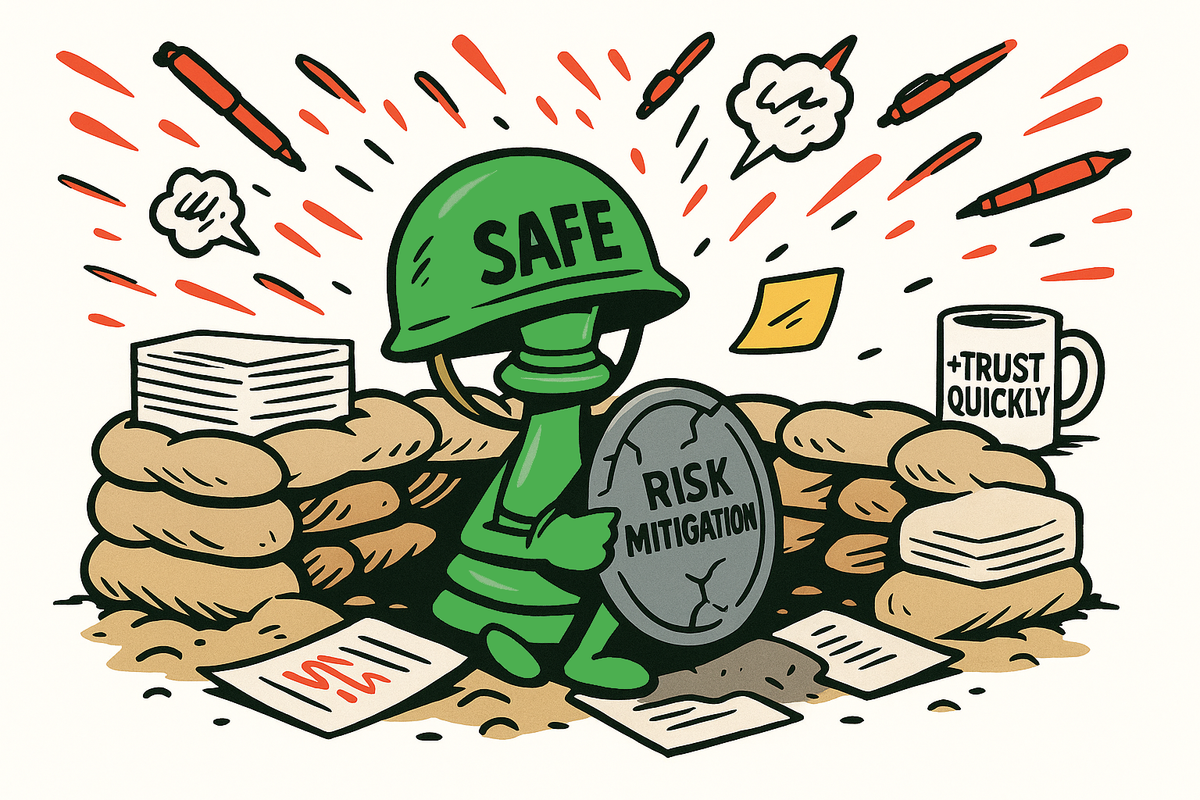
Redliner’s Log – Entry 1.3
Stardate: November 18, 2025
Location: Orbiting Risk Aversion Station. Shields up, progress down.
We say it’s about being safe. We say it’s about protecting the company. We say it’s just how deals get done.
But deep down? We know something’s off.
I’ve watched more deals get slowed down by misdirected caution than by real, material risk. I’ve seen teams burn cycles marking up language that wouldn’t hurt them while leaving the stuff that could untouched. I’ve seen trust erode not because anyone was hostile… but because the system nudged them to act like adversaries from the start.
And I’ve come to a frustrating conclusion.
We’re not too careful. We’re just careful at the wrong times and in the wrong places.
The Illusion of Safety
Let’s be honest: most legal departments aren’t rewarded for helping the business move forward. They’re rewarded for avoiding blame.
So the incentive becomes over-indexing on edge cases. Pad the protections. Mark up anything that might be misinterpreted.
But here’s the thing. Every extra layer of protection adds a layer of friction... and not all friction is worth it.
A clause that’s “standard” for one party feels aggressive to another. A markup that feels “typical” in isolation creates tension when viewed in context.
The result? Deals stall not because the risk is high… but because the system is misaligned.
Legal Caution Isn’t the Problem; Misdirected Energy Is
I’m not anti-legal. Hell, I am legal.
I’ve spent decades doing the work:
- Reading every clause.
- Thinking through downsides.
- Figuring out alternatives.
- Contemplating negative outcomes.
- Protecting the company.
This isn’t about being less careful. It’s about being smarter about where we aim our scrutiny.
Because what I see now is this: we’re applying deep legal rigor… to the wrong areas of the contract.
Meanwhile, the things that truly move the needle—the business terms that make or break the deal, the real liability exposure, and the issues seasoned lawyers actually care about—end up buried in the flotsam and jetsam.
We’re not under-lawyering. We’re over-lawyering the noise—and under-serving the signal.
“We Just Want to Be Thorough”
This is the line I hear over and over. And on its face, it’s reasonable.
But the real meaning is often: “We’re not sure where the landmines are, so we’re going to treat everything like a minefield.”
So the redlines pile up. The “suggestions” become demands. The clause-by-clause tug-of-war begins... even if the parties would’ve agreed on 90% of it from the outset if they’d just seen each other’s cards.
It’s not malicious. It’s the system.
When Playbooks Don’t Align, the Gloves Come Off
Here’s the root issue.
Both sides come to the table with their own playbook (whether actual or in their heads).
They’re not evil. They’re just different:
- One values flexibility, the other certainty.
- One has a strict indemnity policy, the other doesn’t even use the term.
- One has 10 lawyers. The other is a founder reading contracts at midnight.
And because those playbooks live in silos (and because our current tools don’t help bridge them), we start negotiating in the dark.
We don’t explain where we’re coming from. We don’t show our reasoning. We just start slashing and commenting.
It’s no wonder the other side reacts defensively. They think we’re being aggressive when we’re really just playing out our defaults.
The tragedy? We probably weren’t that far apart.
Legal PTSD Is Real—But It’s Not the Whole Story
Yes, some of this comes from past scars.
We’ve all had that clause come back to haunt us. We’ve all seen what happens when ambiguity bites back. We’ve all been second-guessed by someone with hindsight and a louder voice.
So we react. We “protect” more. We redline earlier. We strive to make things airtight for our side. And airtight becomes airtight and adversarial.
But not every contract is a landmine. And not every deal partner is out to exploit ambiguity.
The system assumes the worst and trains us to act accordingly.
What If We Started With Transparency?
Here’s the shift that changed how I think:
The problem isn’t too many redlines. It’s that no one agrees where the redlines should go.
What if both sides walked in with the same structural understanding?
- What’s standard.
- What’s often negotiated.
- What the options are for those terms that are negotiated.
Not hiding positions. And not pretending there’s only one “right” answer. Just putting the shape of the deal on the table... clearly.
Suddenly, negotiation becomes faster. Not because we care less. But because we’re clearer on where to care more.
That’s not reckless. That’s efficient. And respectful. And way more likely to lead to “yes.”
This Isn’t About Blame. It’s About Better.
The adversarial instinct didn’t come out of nowhere.
We built it over decades of misaligned incentives, performance-based lawyering, and fear of getting burned.
But it’s costing us.
Time. Trust. Talent. The emotional tax of going ten rounds over language no one actually enforces.
And the fix? It’s not magic. It’s structural transparency.
Start both sides on the same page... literally. Clarify where alignment usually happens. Show the tradeoffs in the places that differ.
Still negotiate. Still advocate. Still protect.
But do it from a place of understanding, not suspicion.
Wrapping it up
This diary isn’t about throwing legal under the bus. It’s about helping legal and business work better together.
We’re not asking for fewer lawyers. We’re asking for fewer redlines that don’t serve a purpose.
I’m still a lawyer. I still defend positions. I still care deeply about getting the contract right.
But now? I care even more about making sure we’re fighting over the right things... and are aligned on what “right” even means.
Transactency launches Q1 2026. Want early access?
Apply for Beta Here
Let’s keep going.
Weigh in
What's your take on this? I'd love to hear your thoughts.
Join the discussion on LinkedIn